Places as a fact
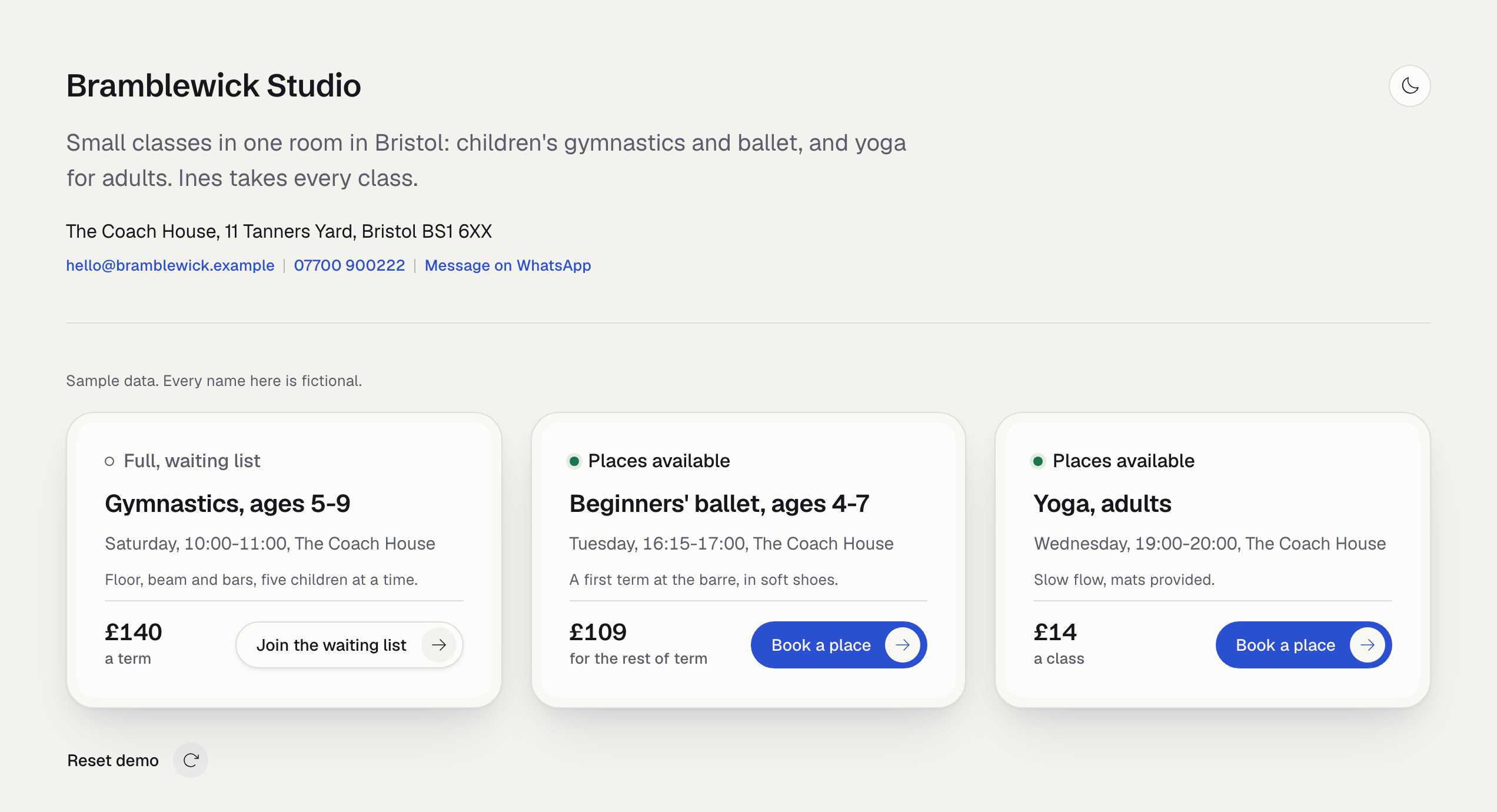
A class is open or it is full. The number is a setting, off by default, and it is never a countdown.
Drop-ins and blocks, a waiting list for a full evening, and the card charged for the exact figure.
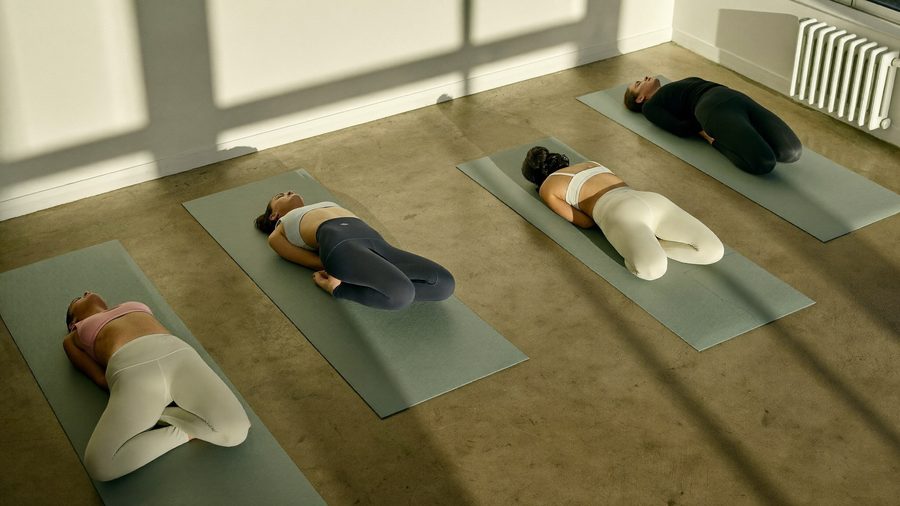
Twelve mats, sixteen people who would like one, and a thread where the quickest reply takes the place.
Somebody bought six classes in June. How many are left is in a notebook, or in somebody's head.
Most booking forms were made for children's clubs, so an adult is asked for a parent's name.
Each class says whether it has places, and the adults' class asks the person booking for their own details.
A class is open or it is full. The number is a setting, off by default, and it is never a countdown.
A single class, a block of six, or a month of four. The server prices it and the card pays it.
An adults' class asks the participant for their own details. There is no age field and no parent's name.
The register shows what each person bought and what is left, and takes one off when they come.
1.5 per cent of the class price on each card booking. Nothing else.
of the class price, on each card booking
a month, whatever you sell
in a month with no card bookings
There is no monthly fee. Stripe's own card fee is separate and is Stripe's to set.
Card payments are made on your own Stripe account. Callover never holds the money and cannot move it.
Yes. A class marked for adults asks the participant for their own details, and no age band is applied.
One studio can run both kinds on one page, which is what the demo does.
The same form becomes that day's waiting list and nothing is charged.
One click offers a freed place to the first person on the list and holds it for 48 hours with one pay button.
Yes. A block is a number of classes bought at once, and the register counts them down as they come.
A month is four classes, counted from the first class attended rather than from the first of the month.
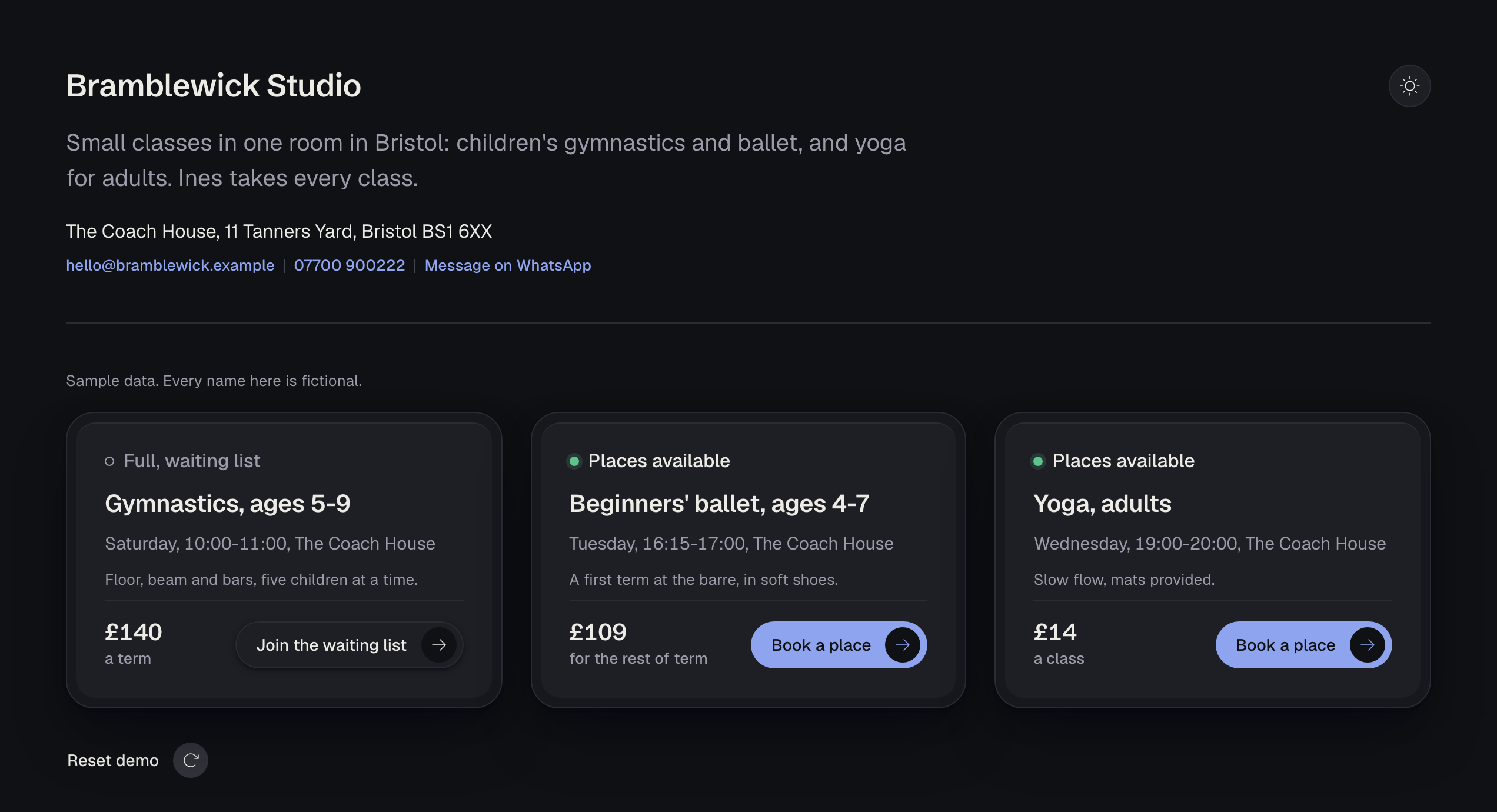
The demo has an adults' yoga class with places, a full children's class, and a waiting list.